In the icy, remote waters of Antarctica, a new study has sounded the alarm on a hidden threat to some of the world’s most pristine marine ecosystems: ship anchor and chain damage.
For the first time, scientists have captured direct evidence of anchor scars and crushed marine life on the Antarctic seafloor—a wake-up call as tourism and research vessel traffic surges in the region.
Published in June 2025 in Frontiers in Conservation Science, a study led by Matthew Mulrennan and collaborators provides the first published observations of anchor and chain damage to Antarctic benthic habitats, revealing both the vulnerability and the resilience of these unique ecosystems
Antarctica’s seafloor has long been shielded from many human impacts, thanks to its remoteness and seasonal sea ice. But that is changing fast. The 2022–2023 season saw over 70,000 tourists arrive on 70 vessels, the highest number ever recorded, alongside dozens of research ships and private yachts. As sea ice shrinks due to climate change, access to shallow, anchorable waters is increasing, raising concerns about the cumulative impact of anchoring on fragile marine habitats
Previous studies have documented anchor damage in tropical and temperate regions, showing that anchoring can devastate seagrass beds, coral reefs, and other sensitive habitats, sometimes with effects lasting decades. However, until now, no one had documented such impacts in Antarctica, where many benthic species are slow-growing, long-lived, and found nowhere else on Earth
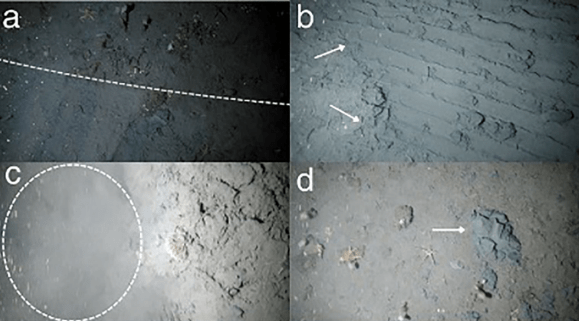
During the austral summer of 2022–2023, the research team conducted 36 underwater camera surveys at sites across the Antarctic Peninsula, Weddell Sea, South Shetland Islands, Marguerite Bay, and South Georgia Island. At Yankee Harbour, the team observed deposited mud and resuspended sediment likely caused by anchor retrieval, clear anchor and chain scars, and crushed sponge colonies.
Antarctica’s seafloor is home to at least 4,000 species that we know of, many of them endemic and slow to recover from disturbance. Anchor damage could have long-lasting effects, with some habitats taking decades or even centuries to recover. The study’s authors recommend urgent action, including:
- Creating a database of anchoring events using ship tracking and operator logs.
- Identifying and protecting vulnerable marine environments (VMEs) where anchoring should be off-limits.
- Promoting the use of dynamic positioning systems or designated mooring areas to minimize seafloor contact.
- Restricting anchoring during short vessel stops.
Understanding human impacts around the world is critical to preserving and restoring valuable ecosystems. This study illustrates the damage human activities can have, often without being totally aware of it. Fortunately, physical anchoring will soon be obsolete as ships are increasingly integrating GPS-assisted or dynamic anchoring, which would resolve damage from anchoring!
References:
Study:
Mulrennan, M., Graham, M., Herbig, J., & Watson, S. J. (2025). Anchor and chain damage to seafloor habitats in Antarctica: first observations. Frontiers in Conservation Science, 6:1500652.
Further reading:
Aronson, R. B., Thatje, S., McClintock, J. B., & Hughes, K. A. (2011). Anthropogenic impacts on marine ecosystems in Antarctica. Annals of the New York Academy of Sciences, 1223, 82–107.
Watson, S. J., Ribó, M., Seabrook, S., Strachan, L. J., Hale, R., & Lamarche, G. (2022). The footprint of ship anchoring on the seafloor. Scientific Reports, 12, 7500.
Jamieson, A. J., Bond, T., & Vescovo, V. (2022). No recovery of a large-scale anthropogenic sediment disturbance on the Pacific seafloor after 77 years at 6460 m depth. Marine Pollution Bulletin, 175, 113374.
 The Science Spotlight