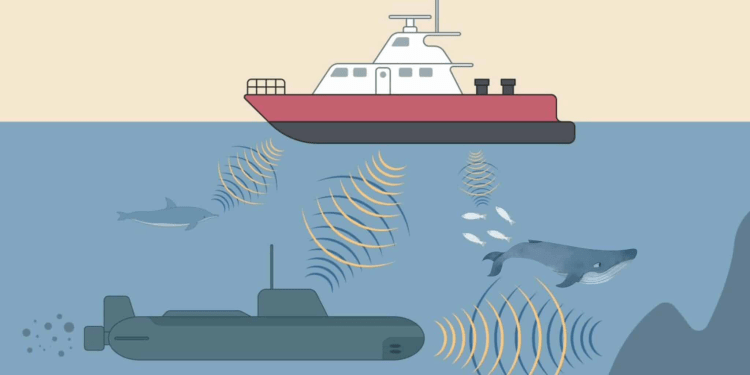
As global marine traffic surges, underwater noise pollution is emerging as a significant threat to marine mammals. A 2019 review highlights the gaps in our understanding of how vessel noise impacts different species, underscoring the urgent need for standardized research and mitigation strategies.
Marine mammals are increasingly exposed to rising levels of underwater noise from ships, which can disrupt their behavior, communication, and well-being. A comprehensive review reveals that ship noise is now the most pervasive source of human-made sound in the oceans, with significant but unevenly studied impacts on different marine mammal species.
As global shipping traffic expands, so does the underwater soundscape, raising concerns about its effects on marine life that rely heavily on sound for survival. Understanding these impacts is critical for marine conservation and sustainable ocean use.
The present review was conducted by an international team led by Christine Erbe from Curtin University, Australia, and collaborators from the UK, South Africa, and other institutions. The study was published in Frontiers in Marine Science in October 2019.
The researchers synthesized decades of studies on vessel noise effects on marine mammals, examining various species, habitats, and vessel types worldwide. They analyzed sound generation and propagation mechanisms, behavioral and physiological responses of marine mammals, and identified gaps in current knowledge.
Their findings show that ship noise has increased ambient ocean noise levels by up to 3 decibels per decade in some regions, with commercial shipping responsible for most of this rise. Noise from large ships can reach source levels exceeding 200 dB re 1 µPa at 1 meter, primarily due to propeller cavitation and engine noise. This noise propagates downward into the ocean, potentially affecting deep-diving species over long distances. Behavioral changes documented include altered movement patterns, vocalization interference, and stress responses. However, research has focused disproportionately on easily accessible species like bottlenose dolphins and humpback whales, leaving many others, such as river dolphins and deep-ocean species, poorly understood.
Despite limitations on recording types and region, the review underscores that chronic exposure to ship noise could have serious consequences for marine mammal populations by disrupting communication, navigation, feeding, and breeding behaviors. It calls for standardized research protocols and interdisciplinary collaboration to better assess and mitigate these impacts.
Looking ahead, ship noise is an escalating global threat to marine mammals, with complex effects that vary by species, environment, and noise characteristics. Addressing the knowledge gaps and improving study designs are essential steps toward protecting these vital ocean inhabitants in an increasingly noisy world
Why it matters.
The study underscores how the rising loudness of the ocean—driven largely by ship noise—is disrupting the essential acoustic environment marine mammals depend on, highlighting the critical need to address this growing underwater noise pollution.
References:
Study:
Erbe C, Marley SA, Schoeman RP, Smith JN, Trigg LE, Embling CB (2019). The Effects of Ship Noise on Marine Mammals—A Review. Frontiers in Marine Science, 6:606. doi:10.3389/fmars.2019.00606
Further reading
Andrew RK, Howe BM, Mercer JA (2002). Long-time trends in ship traffic noise for four sites off the North American west coast. J. Acoust. Soc. Am. 129(2):642-651.
Richardson WJ, Greene CR Jr, Malme CI, Thomson DH (1995). Marine Mammals and Noise. Academic Press.
Nowacek DP, Thorne LH, Johnston DW, Tyack PL (2007). Responses of cetaceans to anthropogenic noise. Mammal Review, 37(2):81-115.
 The Science Spotlight