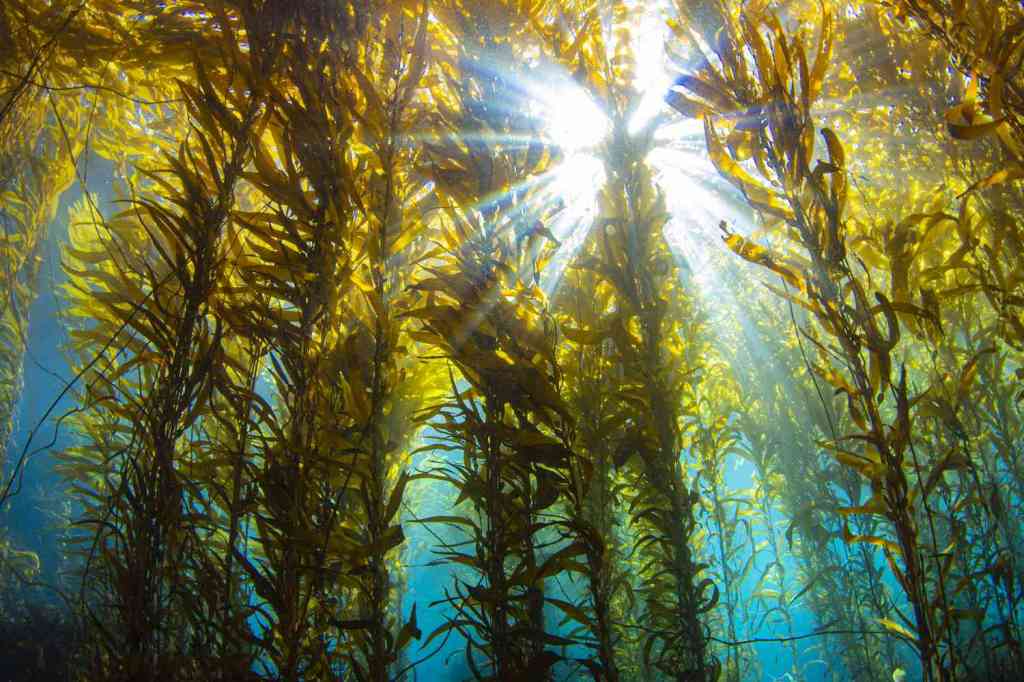
Turf algae are chemically transforming temperate reefs by releasing bioactive compounds that inhibit the recovery of kelp forests, a vital marine ecosystem, locking reefs into a turf-dominated state.
Turf algae release a cocktail of bioactive chemicals that drastically reshape the chemical environment of temperate reefs, suppressing the recruitment and recovery of vital kelp forests.
Kelp forests are crucial marine habitats that support biodiversity, fisheries, and coastal economies worldwide. Kelp and turf algae are often in direct competition for space and resources, and ecosystems can shift from one to the other. Understanding the strategies that turf algae use to dominate previously kelp-dominated systems sheds light on the mechanisms by which turf algae take over.
A team led by Shane P. Farrell from Bigelow Laboratory for Ocean Sciences and the University of Maine published this study on May 22, 2025, in Science, revealing the chemical mechanisms by which turf algae impede kelp forest recovery along Maine’s coast.
The researchers conducted underwater surveys and collected water and seaweed samples from multiple sites along the Gulf of Maine, where kelp forests have collapsed in warmer southern regions but persist in cooler northern areas. They used non-targeted ultrahigh-performance liquid chromatography–tandem mass spectrometry (UHPLC-MS/MS) to profile thousands of chemical compounds (the “metabolome”) in seawater and seaweed exudates. Laboratory experiments then tested the effects of these chemical mixtures on kelp gametophytes, the microscopic life stage critical for kelp recruitment.
They found that turf-dominated reefs harbor a distinct and chemically rich metabolome compared to kelp forests, with over 1,000 unique chemical features exclusive to turf algae. Notably, turf algae exude alkaloids and other bioactive compounds that significantly reduce kelp gametophyte survival by up to 180% in lab tests. These chemicals act as allelopathic agents, directly inhibiting kelp recruitment and thus preventing forest recovery. By contrast, metabolomes from kelp-dominated sites did not harm kelp gametophytes.
The study focused on a single geographic region and a limited number of kelp species tested, which may affect the generalizability of the findings. Nonetheless, findings offer promising insights into other ecosystems as researchers may broaden their search in other regions.
These findings imply that chemical interactions play a pivotal role in the shift from kelp forests to turf algae, beyond physical competition or grazing pressures. This chemical feedback loop could explain why kelp forests fail to rebound even when environmental conditions improve, highlighting the need for management strategies that disrupt these chemical barriers. Addressing turf algae dominance may require not only reducing global warming but also targeted local interventions to restore kelp ecosystems and their services.
Why it matters.
Understanding how chemical interactions shape underwater ecosystems reveals the unseen complexity of marine community shifts and points to new strategies for restoring kelp forests. Future research can explore how disrupting these chemical feedbacks could help reverse turf dominance and promote kelp forest resilience on a global scale.
References:
Study:
Farrell, S. P., Petras, D., Stincone, P., et al. (2025). Turf algae redefine the chemical landscape of temperate reefs, limiting kelp forest recovery. Science, 376(6590), 876-882.
Further Reading:
NOAA Ocean Service. (2023). Kelp forests: Importance and threats in a changing ocean.
University of Maine. (2025). Chemical warfare by turf algae impedes kelp forest recovery. University of Maine Press Release.
Marine Ecology Progress Series. (2024). The role of allelopathy in marine ecosystem shifts.
Image credit Douglas Klug / Getty Images
 The Science Spotlight