Far beyond offering glimpses into coral kingdoms and underwater adventures, scuba diving is quietly fueling a global economic sector.
A multinational study led by Anna Schuhbauer at the University of British Columbia—published July 25, 2025, in Cell Reports Sustainability—reveals, for the first time, the financial scale of dive tourism, positioning it as a key player in ocean sustainability and local livelihoods.
Marine tourism has long been celebrated not only for its recreational appeal but also for its power to drive conservation and economic benefits across coastal communities. According to the World Resources Institute, ecotourism is now considered a cornerstone of sustainable “Blue Economy” strategies, helping nations regenerate marine ecosystems while developing local economies. However, despite clear trends of growth, the true financial footprint of recreational diving had remained elusive until now.
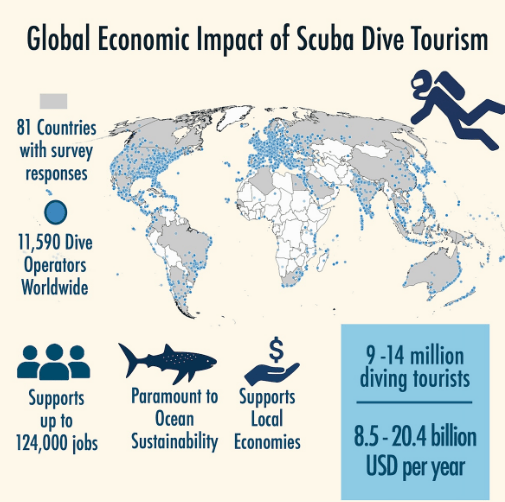
To bridge that knowledge gap, Schuhbauer and an international team from institutions including Scripps Institution of Oceanography and Simon Fraser University scoured the globe—literally and figuratively. The researchers identified more than 11,590 scuba diving operators spread over 81 countries using web scraping, databases from PADI (the world’s largest dive association), and painstaking manual surveys.
What they uncovered is eye-opening: scuba dive tourism generates between $8.5 billion and $20.4 billion globally each year, supporting up to 124,000 jobs worldwide.
Every year, 8.9–13.6 million people travel to dive or snorkel in marine environments, with most of the economic benefit flowing directly to local communities—80% of dive operator employees are local nationals.
Dive day-trips cost an average of $76–114 per person per day; liveaboard excursions run higher, at $208–270 per day, though these make up less than 1% of overall revenue. The findings align with regional studies such as Mexico’s (generating up to $725 million annually) and highlight how tourism dollars are a critical lifeline, especially in lower-income coastal communities.
The implications are clear. Dive tourism is not just fun and fish; it is a vital thread in the fabric of local economies and could be a lever for sustainable development and marine protection.
References:
Study:
Schuhbauer, A. et al. (2025). “Global economic impact of scuba dive tourism.” Cell Reports Sustainability, 2, 100435.
Further reading:
Northrop, E., et al. (2022). “Opportunities for Transforming Coastal and Marine Tourism: Towards Sustainability, Regeneration and Resilience.” World Resources Institute.
Arcos-Aguilar, R. et al. (2021). “Diving tourism in Mexico – Economic and conservation importance.” Marine Policy, 126, 104410.
Spalding, M. et al. (2017). “Mapping the global value and distribution of coral reef tourism.” Marine Policy, 82, 104–113.
 The Science Spotlight