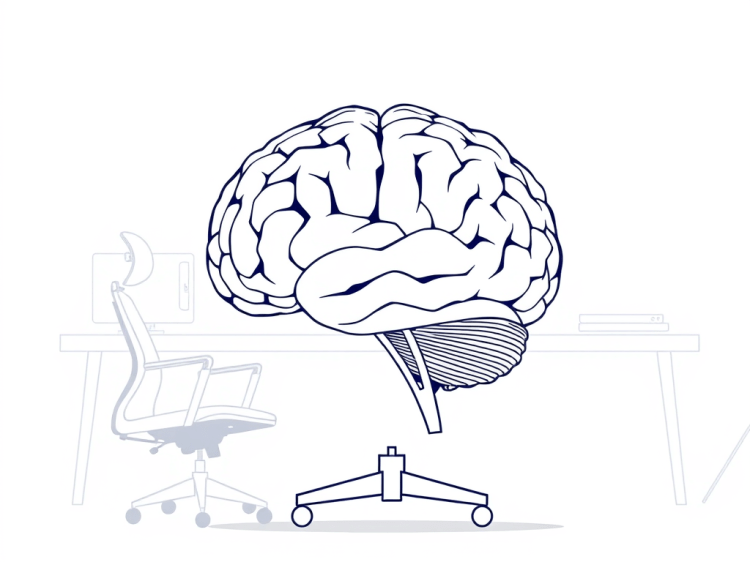
Sedentary behavior negatively impacts brain health by accelerating neurodegeneration and cognitive decline. Limiting inactivity may therefore be beneficial to older individuals, limiting the negative effects of sedentary activity.
Spending more time sitting is associated with accelerated brain shrinkage and worsening cognitive abilities in older adults, even among those who maintain high levels of physical activity. Over a seven-year period, researchers found that increased sedentary behavior independently predicts neurodegeneration and declines in memory and processing speed.
As populations age worldwide, understanding modifiable lifestyle factors that influence brain health is critical to combating Alzheimer’s disease (AD) and related dementias. Sedentary behavior—prolonged sitting or low energy expenditure activities—has emerged as a potential risk factor for cognitive decline, but its long-term effects on brain structure and function have remained unclear.
This comprehensive longitudinal study was conducted by a multidisciplinary team led by Marissa A. Gogniat and colleagues at the Vanderbilt Memory and Alzheimer’s Center, Vanderbilt University Medical Center, and affiliated institutions. The research was published in March 2025 in the journal Alzheimer’s & Dementia.
The study analyzed data from 404 older adults enrolled in the Vanderbilt Memory and Aging Project. Participants wore wrist accelerometers continuously for seven days to objectively measure sedentary time, physical activity, and sleep. They also underwent detailed neuropsychological testing and 3T brain MRI scans at multiple intervals over seven years. The researchers used rigorous statistical models to examine how baseline sedentary behavior related to changes in brain volume and cognitive performance, adjusting for physical activity levels and genetic risk factors such as the APOE-ε4 allele.
Key findings showed that greater sedentary time was linked cross-sectionally to thinner cortical regions typically affected by AD and poorer episodic memory. Longitudinally, individuals who spent more time sedentary experienced faster hippocampal volume loss—a key brain area for memory—and declines in naming ability and processing speed. Notably, some associations were stronger in carriers of the APOE-ε4 gene, which increases AD risk. These results held even after accounting for moderate-to-vigorous physical activity, highlighting sedentary behavior as an independent risk factor.
However, the study has limitations. Participants were free of dementia at baseline, so findings may not apply to those with existing cognitive impairment. Also, while accelerometers provide objective data, they cannot capture contextual information about sedentary activities, such as social engagement or cognitive stimulation during sitting.
These findings underscore the importance of reducing sedentary time in older adults as a potential strategy to preserve brain health. Interventions encouraging more frequent breaks from sitting, alongside physical activity, could enhance cognitive resilience and mitigate dementia risk.
Why it matters.
Sedentary behavior is not just a benign lifestyle habit but a significant contributor to brain aging and cognitive decline. Public health efforts could target reductions in sitting time as part of comprehensive approaches to healthy aging and dementia prevention.
References:
Study:
Gogniat, M. A., Khan, O. A., Li, J., et al. (2025). Increased sedentary behavior is associated with neurodegeneration and worse cognition in older adults over a 7-year period despite high levels of physical activity. Alzheimer’s & Dementia, 21, e70157. https://doi.org/10.1002/alz.70157
Further reading:
World Health Organization. (2020). Guidelines on physical activity and sedentary behaviour. WHO Press.
Falck, R. S., Davis, J. C., & Liu-Ambrose, T. (2017). What is the association between sedentary behaviour and cognitive function? A systematic review. British Journal of Sports Medicine, 51(10), 800-811.
Voss, M. W., Nagamatsu, L. S., Liu-Ambrose, T., & Kramer, A. F. (2011). Exercise, brain, and cognition across the lifespan. Journal of Applied Physiology, 111(5), 1505-1513.
 The Science Spotlight