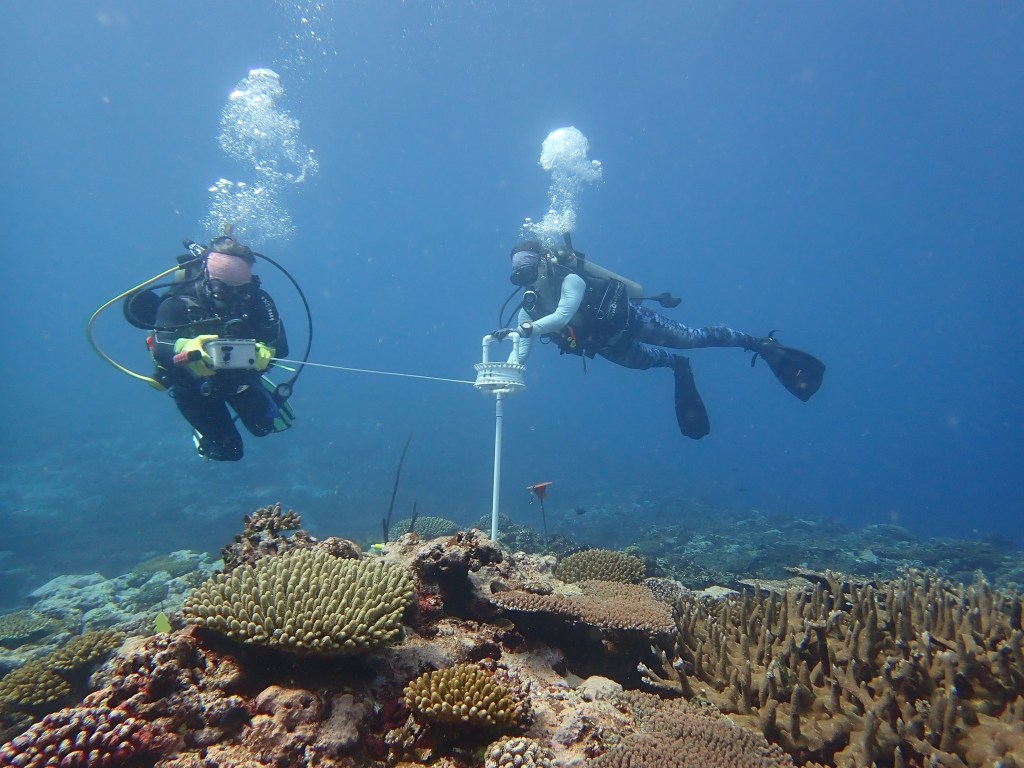
Coral reefs are declining faster than they can naturally expand into cooler, higher-latitude refuges, signaling a dire future for these vital ecosystems.
New research reveals a mismatch between the rapid decline of coral reefs due to climate change and their much slower ability to expand into cooler, high-latitude waters. While coral cover is predicted to plummet significantly within the next 40 to 80 years, large-scale coral range expansion into new habitats may take centuries, leaving reefs vulnerable to ongoing environmental threats.
Coral reefs are vital marine ecosystems supporting about a third of all marine species and the livelihoods of millions globally. Their sensitivity to warming oceans and acidification has raised concerns about their future, prompting scientists to investigate whether poleward migration could serve as a refuge for these ecosystems amid climate change.
The study, published in Science Advances in June 2025, was conducted by Noam S. Vogt-Vincent and colleagues from the Hawai’i Institute of Marine Biology, University of Hawai’i at Mānoa, alongside collaborators at the University of New Hampshire and Victoria University of Wellington.
The team developed an eco-evolutionary metacommunity model called CERES (Coral Eco-evolutionary Range Expansion Simulation) to simulate coral reef dynamics globally. CERES integrates multiple environmental factors—sea surface temperature, pH, light availability—and models four interacting coral assemblages with different growth rates and thermal tolerances. The model was run across nearly 88,000 subpopulations worldwide, incorporating data from 12 climate models to simulate past, present, and future coral distributions.
Their simulations successfully reproduced observed coral distributions and recent declines across the Indo-Pacific and Caribbean regions. Crucially, the results indicated that while coral reefs are expected to suffer severe declines in cover within the next few decades, the expansion of coral ranges into higher latitudes will lag far behind, requiring centuries to establish significant new reef habitats. This temporal mismatch suggests that natural poleward migration alone will not suffice to buffer coral biodiversity loss under rapid anthropogenic climate change.
However, the study acknowledges limitations. The model simplifies complex reef formation processes and does not explicitly include geological factors or local stressors such as pollution and sedimentation, which can also influence coral survival and expansion. Additionally, the model’s global parameterization may not capture regional nuances in coral ecology and evolutionary history, and some assumptions about larval dispersal and genetic adaptation rates remain uncertain.
Despite these caveats, the findings underscore a critical implication: relying on coral range expansion as a natural refuge strategy is insufficient given the pace of climate change. This highlights the urgent need to reduce greenhouse gas emissions and mitigate other human impacts on coral reefs, both in tropical strongholds and potential high-latitude refuges.
Why it matters.
Species in marine ecosystems are migrating poleward as water temperatures rise. However, species such as coral, may be too slow to migrate. Certain coral are spreading though, with IndoPacific coral increasingly spreading in Japan and Jeju, South Korea, and are altering the ecological status quo as a result.
References:
Study:
Vogt-Vincent, N. S., Pringle, J. M., Cornwall, C. E., & McManus, L. C. (2025). Anthropogenic climate change will likely outpace coral range expansion. Science Advances, 11, eadr2545.
Further reading:
Hoegh-Guldberg, O., et al. (2007). Coral reefs under rapid climate change and ocean acidification. Science, 318(5857), 1737-1742.
Hughes, T. P., et al. (2017). Global warming and recurrent mass bleaching of corals. Nature, 543(7645), 373-377.
Global Coral Reef Monitoring Network (GCRMN). (2020). Status of Coral Reefs of the World: 2020 Report.
 The Science Spotlight