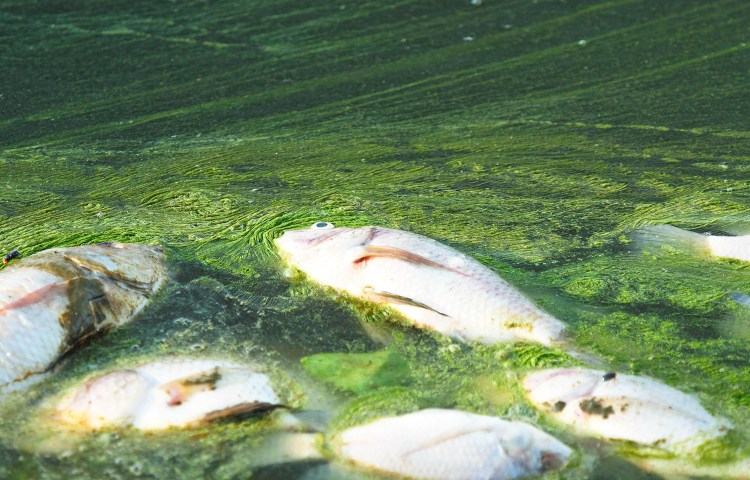
Research led by Michele A. Burford and colleagues shows that integrating environmental data and artificial intelligence can improve the prediction and management of increasingly frequent and widespread harmful cyanobacterial algal blooms, which threaten water quality, wildlife, and economies worldwide.
Harmful algal blooms—those thick, sometimes toxic mats of cyanobacteria that foul up lakes and rivers—are increasing in frequency worldwide [1-3]. Research has long pointed to rising global temperatures and nutrient runoff as key drivers of harmful algal blooms, but a new study suggests there may finally be a way to get ahead of these outbreaks: harnessing the power of integrated data and artificial intelligence [1].
Cyanobacterial blooms also threaten drinking water, endanger wildlife, and can devastate local economies [2]. As climate change accelerates, these blooms are spreading to new regions and becoming harder to predict. Understanding the tangled web of environmental and biological factors behind cyanoHABs is now critical for keeping our freshwater safe.
A team led by Michele A. Burford, along with colleagues from several global institutions, tackled this challenge head-on [1]. Their study, published in Nature Communications in 2025, offers a comprehensive look at how cyanoHAB research could leap forward by embracing new technologies and big data.
The researchers dove into a range of existing datasets—environmental records, nutrient chemistry, and the genetic makeup of cyanobacterial communities—arguing that machine learning and AI are key to making sense of it all. By combining ‘omics data with climate and environmental variables, their approach aims to pinpoint the drivers that set blooms in motion and determine how intense or toxic they become.
Crucially, the team found that the dynamics of cyanoHABs can be captured with robust predictive models. These models take into account everything from temperature swings and nutrient spikes to subtle microbial interactions, offering a much clearer window into when and where blooms might strike next. Still, the researchers caution that there are gaps to fill, such as a lack of long-term data from many at-risk regions and a need to better understand how different strains of cyanobacteria interact and contribute to toxicity.
The study doesn’t shy away from challenges. Long-term observational data is sparse in many areas, and the sheer complexity of environmental and biological influences makes modeling difficult. What’s more, the human side of the story—how communities are affected and respond—remains underexplored, making it tough to assess the full societal risks.
Despite these hurdles, the implications are promising. Integrating AI with environmental data could power smarter early warning systems, giving water managers and public health officials a valuable head start against harmful blooms. By identifying the conditions that trigger outbreaks, this research also lays the groundwork for more targeted and effective interventions.
The study charts a path forward for the science of cyanoHABs, urging global collaboration and data sharing. As harmful blooms continue to rise in a warming world, this research highlights the urgent need for new tools and approaches to protect freshwater ecosystems—and the people and animals that depend on them.
Why it matters.
The ability to detect and predict algal blooms could enable the implementation of algal control methods – from chemical to biological mechanisms – that could mitigate or altogether prevent blooms. Understanding the early signs of various algal blooms therefore has broad socioeconomic and ecological implications.
References
[1] Burford, M. A., Carey, C. C., Hamilton, D. P., Huisman, J., Paerl, H. W., Wood, S. A., & Wulff, A. (2025). Advancing the research agenda for improving understanding of cyanobacteria in a future of global change. Nature Communications, 16, Article 59250. https://doi.org/10.1038/s41467-025-59250-y
[2] U.S. Environmental Protection Agency. Cyanobacterial Harmful Algal Blooms Forecasting Research. EPA. (2025). https://www.epa.gov/water-research/cyanobacterial-harmful-algal-blooms-forecasting-research
[3] Anderson, D. M., et al. (2021). Evidence for massive and recurrent toxic blooms of Alexandrium catenella in the Alaskan Arctic. Proceedings of the National Academy of Sciences, 118(41), e2107387118. https://doi.org/10.1073/pnas.2107387118 également.
Image credit Chelsea Technologies (https://chelsea.co.uk/monitoring-algal-blooms-maintaining-water-quality-and-chelsea-technologies-solutions-for-commercial-aquaculture/)
 The Science Spotlight