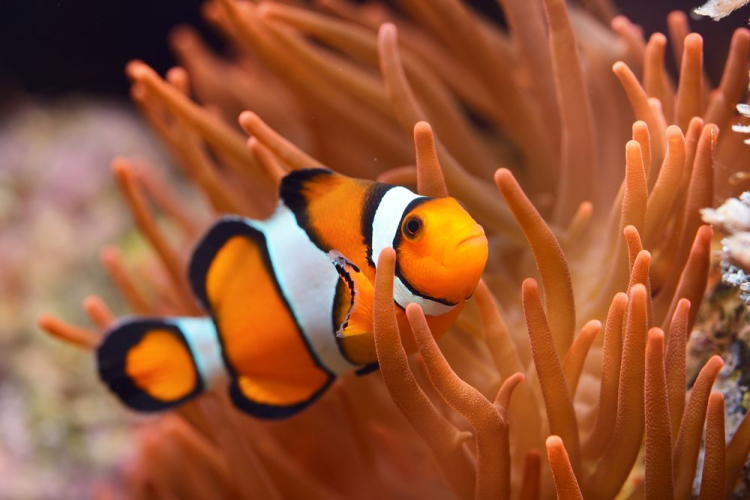
A new study reveals that clownfish can shrink their bodies in response to heatwaves or social stress, enhancing their survival rates, which challenges traditional views of vertebrate growth and suggests adaptive strategies for coping with climate change.
Clownfish can actually shrink their bodies to cope with extreme heat stress and social stress, a surprising discovery that challenges the traditional view of vertebrate growth as a one-way street. During a recent marine heatwave, most clownfish in a wild population in Papua New Guinea shrank at least once, and those that shrank multiple times had significantly higher survival rates [1].
This groundbreaking research reveals how clownfish use remarkable growth plasticity to endure environmental challenges, offering new insights into how coral reef species might adapt in a world characterised by increased frequency of marine heatwaves [2].
The study was conducted by Melissa A. Versteeg and colleagues from Newcastle University, University of Leeds, and Boston University, and published in Science Advances in May 2025 [1]. Their work focused on the iconic clown anemonefish (Amphiprion percula) and how it responds to heat stress combined with social dynamics.
To investigate, the team tracked 134 individual clownfish from 67 breeding pairs in Kimbe Bay, Papua New Guinea, over five lunar months during the world’s fourth global coral bleaching event in 2023. They measured fish length monthly and recorded temperature data at the scale of individual sea anemones, the clownfish’s host, to assess heat stress exposure.
The results were striking: 71% of dominant females and 79% of subordinate males shrank at least once during the heatwave, with 41% shrinking multiple times. Shrinking was more likely in larger individuals and was influenced by social rank. Interestingly, fish that shrank multiple times showed greater “catch-up” growth during non-shrinking periods, demonstrating a flexible growth strategy. Moreover, coordinated shrinking between breeding partners increased survival odds, with all fish that shrank multiple times surviving the heat stress event. Statistical models confirmed that heat stress in the current and preceding months predicted growth changes, and social conflict—measured by size ratios within pairs—also influenced shrinking behavior.
While the study offers compelling evidence of adaptive shrinking, it has limitations. The research focused on a single population during one heatwave event, so it remains unclear how widespread this plasticity is across other clownfish populations or species. Additionally, the mechanisms behind shrinking—whether metabolic, cellular, or behavioral—require further exploration. We know communities on coral reefs are reacting to environmental changes [3], but the extent and effectiveness of such changes remain to be determined.
These findings have profound implications for marine ecology. They suggest that some reef fish can dynamically adjust their body size to survive rapid environmental changes, potentially buffering populations against climate-induced heatwaves. Understanding such plasticity could reshape predictions about reef resilience and inform conservation strategies as ocean temperatures continue to rise.
Versteeg et al.’s study reveals that clownfish are not just colorful reef inhabitants but also masters of survival, shrinking their bodies in response to heat and social stress to enhance their chances of living through increasingly hostile ocean conditions.
Why it matters.
Fish living in future oceans could change their body sizes. Smaller fish could in turn affect the livelihood of human fishing communities as well as the nutrient cycles within ecosystems. Distinguishing whether the findings of this study are an isolated, localized, occurrence, or if they are part of a broader coping strategy by marine species will be crucial.
References
[1] Versteeg, M. A., MacDonald, C., Bennett-Smith, M. F., Buston, P. M., & Rueger, T. (2025). Individual clown anemonefish shrink to survive heat stress and social conflict. Science Advances, 11, eadt7079.
[2] NOAA Coral Reef Watch. (2023). Global Coral Bleaching Event – 2023 Update.
[3] Hughes, T. P., et al. (2018). Global warming transforms coral reef assemblages. Nature, 556(7702), 492–496.
(Image credit: Aleksey Stemmer | Shutterstock)
 The Science Spotlight